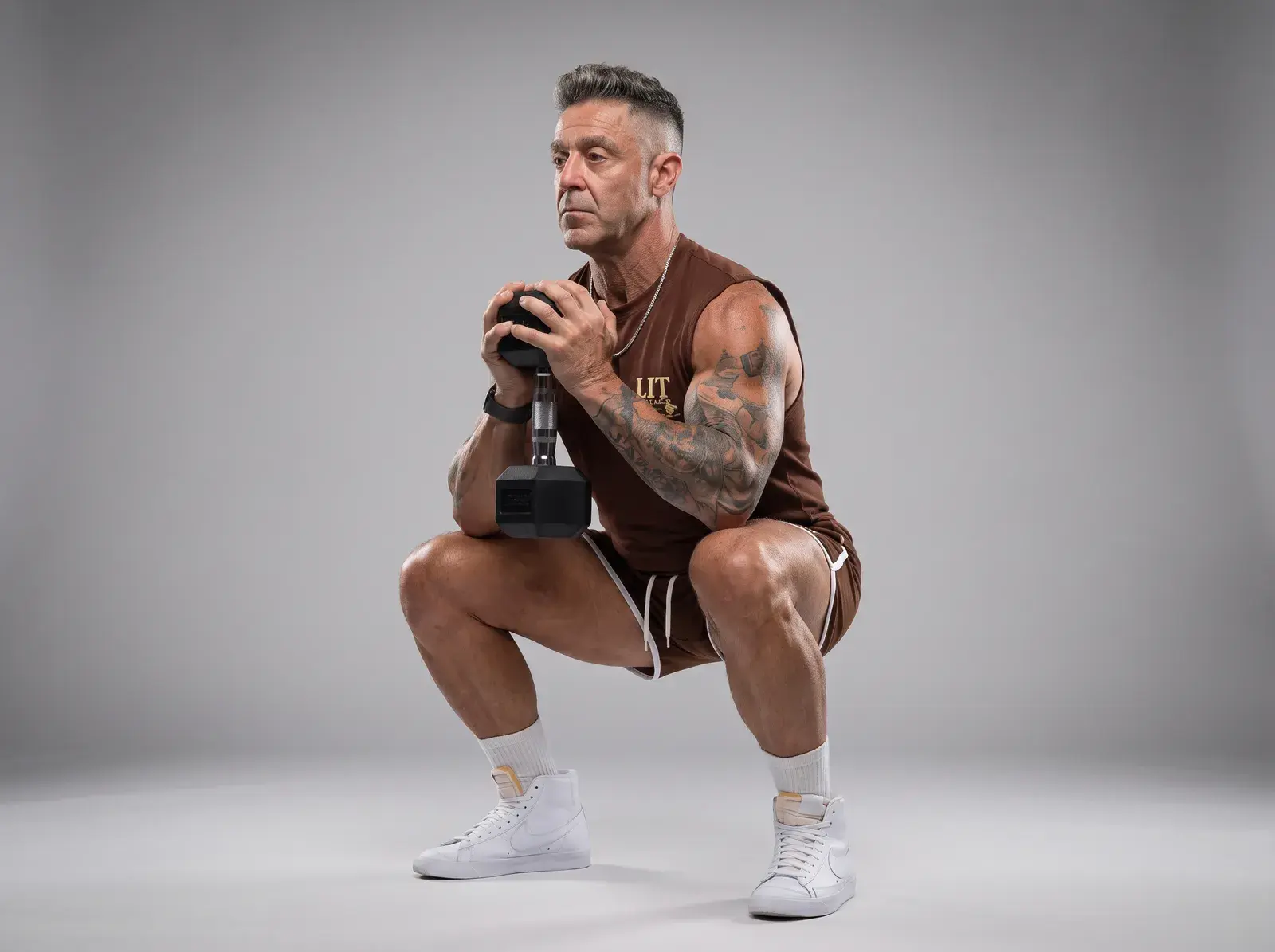
Progressive overload at home: getting stronger without heavier dumbbells
Strength2 min read
The rule behind every strength program is simple: ask a little more of your body over time. In a gym you add plates. At home, with one pair of dumbbells, you have to be cleverer, and you have more options than you might think.
Why it works with light weights
Muscle responds to effort, not to the number on the dumbbell. Research on lighter loads shows they build muscle about as well as heavy ones, as long as the sets are taken close to failure. That is good news for a home setup: the job is to make each set hard enough.
Six ways to make it harder
Pick one per exercise and stick with it until it stops working:
- More reps: add one or two a week until you reach about 20, then pick another method.
- Slower lowering: three to four seconds down makes a light weight feel heavy.
- Pauses: hold for two seconds at the hardest point, such as the bottom of a squat.
- More range: deficit push-ups, or split squats with the front foot raised.
- Less rest: cut rest by 15 seconds each week.
- One side at a time: a split squat or single-arm row doubles the load each side carries.
Track it
Note the exercise, the weight, the reps and the method. A notes app is fine. If this week beat last week in any one of them, you are progressing.
Sample content General guidance, not medical advice. Check with a doctor before starting a new training, diet or supplement plan if you have a health condition, take medication or are pregnant.
Strength questions, answered
The questions people ask most about progressive overload at home.
Can you build muscle with only dumbbells?
Yes. Sets taken close to failure build muscle across a wide range of loads, so dumbbells are enough for most people for a long time.
How many reps should I do with light weights?
Anywhere from about 8 to 30 works, as long as the last few reps are genuinely hard.
How often should I change my home workout?
Keep the same exercises for four to six weeks and change how hard they are. Swapping exercises every week makes progress hard to measure.
Is slow tempo training effective?
Yes. Lowering the weight over three or four seconds makes a light load much harder and is one of the easiest ways to progress at home.
What if I cannot add reps any more?
Switch method: add a pause, slow the lowering, cut your rest or move to a single-leg or single-arm version.
Keep reading
How to keep muscle while losing weight
Strength2 min read
Losing weight fast can cost muscle. Three things protect it: lifting, enough protein and a sensible pace, including for people on weight-loss medication.
Training for longevity: grip, legs and balance
Strength2 min read
Grip strength, leg strength and balance are linked to healthy ageing. How to train all three in two short sessions a week, at any age.
Zone 2 cardio for lifters: how much, how hard, and where it fits
Cardio2 min read
What zone 2 cardio is, how to find it without a lab test, and how to fit two or three easy sessions around strength training without losing gains.